

Fantastic team. They took ownership of the project. As a result, they gave very good creative inputs to improve the ad. They also tried hard to reduce the project cost... Read Ehtesham Ahmed's Full ReviewRead More
How to Hire a Film Fixer in Bangladesh: What to Look For and What to Avoid
You have decided you need a film fixer for your Bangladesh production. You have done enough research to understand that a professional local partner is not optional — the permits, the visas, the community access, the logistics all require someone with established relationships on the ground.
Now comes the harder question: which fixer do you hire?
The Bangladesh film fixer market ranges from experienced, internationally connected production professionals to individuals with a smartphone and an optimistic description of their capabilities. The difference between them is not always visible from an initial email exchange. It becomes visible — painfully — when a permit is refused, a location falls through or a crew day is lost to a problem that a competent fixer would have prevented entirely.
This guide covers how to evaluate, brief and hire a Bangladesh film fixer correctly — including the specific questions to ask, the red flags to watch for and the process that separates professional engagements from expensive mistakes.

When to Start Looking for a Bangladesh Film Fixer
The first mistake most international productions make is engaging their Bangladesh fixer too late. The second is treating fixer engagement as something to finalise after the budget is confirmed. Both errors cost more than they save.
- Standard productions — 6 to 8 weeks minimum: Enough lead time for Ministry of Information permit processing, media visa invitation letters, location scouting, crew confirmation and equipment pre-booking. Six weeks is not comfortable — it is the floor.
- Productions involving restricted areas — 10 to 12 weeks: Cox's Bazar Rohingya settlement access, Chittagong Hill Tracts permits for foreign nationals, military site clearances and major industrial facility negotiations all have processing timelines that cannot be compressed below several weeks regardless of how motivated your fixer is.
- Large commercial productions — 8 to 10 weeks: Full local crew confirmation, cinema equipment reservation, casting or talent sourcing and multi-location logistics all require longer lead time than smaller documentary work.
Engage the fixer before you have finalised the budget — not after. A good Bangladesh fixer will provide the cost information you need to build the budget accurately. A fixer engaged after the budget is set becomes a constraint rather than a partner.
How to Find Potential Film Fixers in Bangladesh
The most reliable sources for identifying film fixers in Bangladesh are:
- Direct referral from other international productions: The most trustworthy source. A documentary filmmaker or broadcast producer who has recently shot in Bangladesh and had a positive experience with their fixer is worth more than any amount of online research. Ask in documentary filmmaker networks, journalism communities and NGO communications circles.
- Production company websites with verifiable Bangladesh track records: Look for production companies or individual fixers who can name specific international productions, broadcasters or organisations they have supported — not generic "worked with leading international brands" language. Real clients and real productions are the signal.
- INGO and development sector networks: For NGO and development documentary work specifically, organisations with Bangladesh country offices frequently use and can recommend local production partners with relevant experience in sensitive, ethically complex filming environments.
- Professional searches with specific outcome questions: Searching "film fixer Bangladesh" online will return several results. What differentiates them is not the search ranking — it is what happens when you ask specific, experience-based questions in the initial conversation.
The Right Questions to Ask a Bangladesh Film Fixer Before Hiring
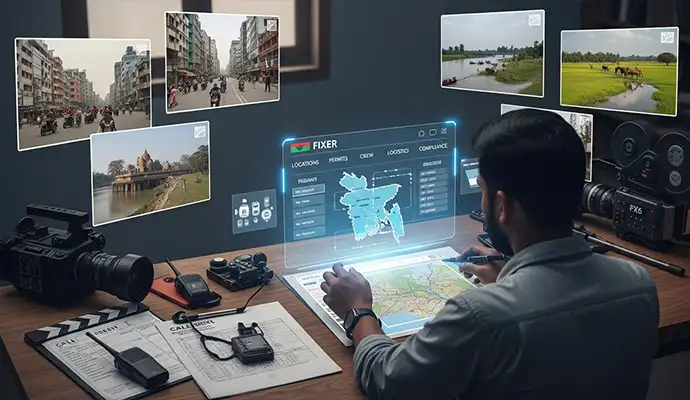
These questions are designed to reveal specific, verifiable competence — not to catch anyone out. A capable fixer will answer them directly and in detail. Evasive, vague or generic answers are informative.
-
"Can you describe two or three specific international productions you have worked on recently — what was the production, who was the client and what was your role?"
The answer should include production types, client nationalities and specific roles. "I have worked with many international teams" is not an answer. -
"Walk me through your process for obtaining a Ministry of Information filming permit — how long does it take you and what happens if there is a problem?"
An experienced fixer will describe the process specifically. They will name the steps, the typical timeline and their approach to common complications. -
"We need to film in [specific location — e.g. a garment factory / Cox's Bazar / the Sundarbans]. Have you arranged access to this type of location before and how did you do it?"
The answer tells you whether they have relevant location experience or whether they are improvising. -
"Can you provide a fully itemised cost estimate — with your day rate, permit costs, crew day rates and logistics all listed separately?"
If they cannot or will not itemise, your budget has no transparency and their accountability has no baseline. -
"How do you handle a situation where a permit is delayed or a location falls through on shoot day?"
They should have a specific answer based on experience, not a theoretical one. -
"What is your availability for pre-production calls and how quickly do you typically respond to messages during the planning phase?"
Communication quality in pre-production predicts communication quality on set. A fixer who takes three days to respond to an email in week one will take three days to respond to a crisis in week three.
Red Flags: When to Walk Away From a Bangladesh Fixer
These warning signs appear consistently in accounts of failed or problematic Bangladesh productions. None of them is definitive alone — but multiple flags from the same fixer is a clear signal.
- Cannot name specific productions they have worked on. Generic claims of international experience without specifics indicate either limited real experience or experience at a level too junior to be relevant.
- Vague or evasive answers about permit processes. "I have good connections" and "don't worry about permits" are not answers. If the fixer cannot describe their permit process specifically, they do not have one.
- A single lump-sum quote with no itemisation. A quote that bundles everything into one figure — "USD $500/day all inclusive" — conceals what you are actually paying for and creates no accountability when costs change.
- Promises of access to restricted locations without explanation. "No problem, I can get you into the ship-breaking yard / Rohingya settlements / military area" — without any explanation of how — is either overconfidence or dishonesty. Both are costly.
- Slow, inconsistent or poor English communication in the enquiry phase. This is not a cultural criticism — it is a practical production requirement. If you cannot communicate clearly with the fixer during an unhurried email exchange, you will not communicate clearly with them during a fast-moving problem on a shoot day.
- No online presence, no website, no verifiable track record. A legitimate, experienced Bangladesh film fixer or production company will have a searchable professional presence. An individual who exists only via WhatsApp and cannot be independently verified should not be managing your permits, crew or budget.
- Pressure for large upfront payment without a written agreement. Advance payments are standard in Bangladesh production — but they should be structured against a clear written scope of services, a production schedule and defined deliverables. Large upfront payments without written terms are a disproportionate risk.
How to Write a Good Production Brief for Your Bangladesh Fixer
The quality of the information you provide to a potential fixer directly determines the quality of the quote and the plan they can offer. A vague brief produces a vague quote. A specific brief produces a specific, accountable cost breakdown and production plan.
A complete production brief for a Bangladesh fixer should include:
- Production type and purpose: Documentary, broadcast news, NGO impact story, commercial TVC, branded content. Who is commissioning the production and what is its intended distribution.
- Shoot dates: Confirmed or proposed dates, including any flexibility. If dates are not yet confirmed, give a window.
- Locations: Specific locations you want to film — not just "Bangladesh" or "Dhaka." The more specific, the more accurate the permit assessment and logistics planning.
- International crew size and composition: How many people are travelling, what roles they fill and what equipment they are bringing from their home country.
- Local crew and equipment needs: What you need the fixer to source locally — DP, camera assistant, sound, PA, driver, specific equipment.
- Subject matter and access requirements: Who and what you are filming. Are there sensitive populations, restricted sites or institutions involved? This drives the permit assessment.
- Budget context: You do not need to share your total budget — but indicating whether this is a low-budget independent production, a mid-range documentary or a fully-funded broadcaster commission helps the fixer calibrate their approach and recommendations.
- Decision timeline: When you need the quote by and when you expect to confirm the engagement. This is fair to the fixer and focuses the response.
Evaluating Fixer Quotes: What a Professional Quote Looks Like
When you receive quotes from multiple Bangladesh fixers, the format of the quote is as revealing as the number at the bottom.
A professional Bangladesh fixer quote should contain:
- Itemised breakdown by budget line: Fixer day rate, local crew day rates by role, equipment rental, transport (per day or per trip), accommodation, permit and facilitation costs, and any location-specific access fees — listed separately, not bundled.
- Assumptions clearly stated: Number of shoot days, number of locations, crew size and equipment list the quote is based on. If any of these change, the quote changes — and a professional quote makes this transparent.
- Permit processing fees vs government fees clearly separated: Government fees are small and fixed. Facilitation fees (the fixer's time and relationship cost of obtaining permits) are variable. These should appear as separate line items.
- A contingency allowance: Any experienced fixer will include a contingency line — typically 10-15% of total — to cover schedule changes, location adjustments and unforeseen costs. A quote without a contingency line either underestimates complexity or plans to surprise you with extras later.
- Payment terms clearly defined: When deposits are due, what triggers final payment and what the refund or adjustment policy is for schedule changes.
A quote that is simply a day rate with no further detail is not a budget document. It is an opening position in a negotiation that will expand unpredictably once production begins.
The Agreement: What Should Be in Writing Before You Confirm
International productions working with Bangladesh fixers should have a written agreement in place before any money changes hands. This does not need to be a complex legal document — but it should confirm the key terms clearly.
- Scope of services — what the fixer is responsible for and what falls outside the agreement
- Production dates and locations covered
- Total agreed cost and payment schedule — deposit, milestone payments and final settlement
- What happens if production dates change, locations are added or the shoot extends
- Cancellation and rescheduling terms
- Confirmation of who is responsible for obtaining specific permits and what the process is if they are delayed
- Insurance responsibilities — whose insurance covers what
A fixer who is reluctant to put terms in writing is communicating something important about how they work. All professional Bangladesh production partners will operate with a written agreement as standard.
Frequently Asked Questions — How to Hire a Film Fixer in Bangladesh
Engage your Bangladesh film fixer a minimum of six to eight weeks before your shoot date for standard productions. Productions requiring restricted area access — Cox's Bazar refugee settlements, Chittagong Hill Tracts, military sites or major industrial facilities — need ten to twelve weeks. The fixer needs time to process permits, arrange visa invitation letters, scout locations and confirm local crew and equipment availability before your crew arrives.
Key questions include: Which specific productions have you worked on and what was your role? Which government contacts do you have for Ministry of Information permit processing? Can you provide an itemised cost breakdown separating your day rate from permits, transport and crew? How do you handle permit refusals or location access problems on the day? What is your process for media visa invitation letters? Ask for specific answers — vague responses to any of these questions are a warning sign.
Red flags include: inability to name specific productions they have supported, vague answers about permit processes and government contacts, quotes that bundle all costs into a single total without itemisation, poor or delayed English communication during the enquiry process, no verifiable online presence or client references, and promises of access to restricted locations without explaining how that access will be obtained.
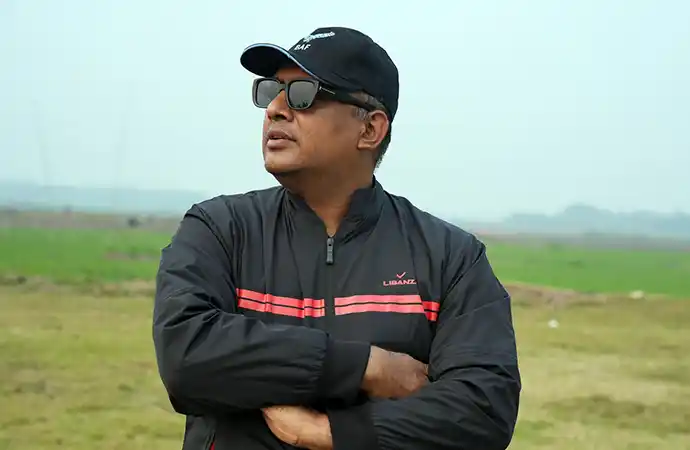
About the Author
Azizul Hoque Shiplu
Founder and Film Director of Libanza Films. Azizul has worked in commercial film production and advertising since 2007, beginning his career at Ogilvy and Mather and training at the Zahir Raihan Film Institute. Libanza Films has provided film fixer and production support for international crews from the USA, UK, Belgium, Romania, Malaysia, Ecuador, Singapore, UAE, France and India — including ongoing broadcast work with Al Arabiya News (UAE) and production partnerships with RagingNation Films, Los Angeles. The evaluation criteria, questions and red flags in this guide reflect the standards Libanza Films applies to every international production engagement — and the patterns observed across many years of the Bangladesh fixer market.
Ready to Talk to a Film Fixer in Bangladesh?
Libanza Films provides professional film fixer and production support for international productions across Bangladesh. We answer every question in this guide directly — with specific production references, transparent itemised quotes and a pre-production process built around your schedule and compliance requirements.
Send us your production brief and we will respond with a full, itemised support plan within 48 hours.
Related Reading
- Film Fixer in Bangladesh — Full National Coverage and Pricing
- Film Fixer in Dhaka — Permits, Old City Access and Broadcast News
- Film Fixer in Cox's Bazar — RRRC Permits, Coastal and Camp Productions
- Film Fixer in Sundarbans — Forest Permits, Boat Logistics and Wildlife
- Film Fixer in Chittagong — Ship-Breaking Yards and Hill Tracts Access
- Film Fixer in Sylhet — Tea Estates, Haor Wetlands and Swamp Forest
- Filming Permits and Media Visa Guidance in Bangladesh
- Drone Filming Permits in Bangladesh: Complete Guide (2026)
- Filming in Bangladesh from the UK and USA: Guide for Diaspora Filmmakers (2026)
- What Is a Film Fixer? A Guide for International Productions Filming in Bangladesh
- How Much Does a Film Fixer Cost in Bangladesh? (2026 Guide)
- Filming Costs in Bangladesh: Budget Guide for International Productions (2026)
- Filming Permits in Bangladesh Explained: Step-by-Step Guide for Foreign Crews
- Film Locations in Bangladesh: A Director's Guide for International Productions
- International Production Support in Bangladesh: What Foreign Production Companies Need to Know
Customer Reviews

Very dedicated team! Apprecite their enthusiasm, creativity and passion for their work... Read Md. Jamil Hossain Chowdhury Rahat's Full ReviewRead More


Libanza specializes in creating captivating films and advertisements with compelling narratives and stunning visuals... Read Riad Full ReviewRead More
Get in Touch
Our Clients
Diverse industries, trusted partnerships. From advertising agencies to corporate entities and non-profit organizations, our clients rely on us to bring their creative visions to life. With passion, expertise, and attention to detail, we deliver exceptional video production solutions that exceed expectations. Join our esteemed clientele and experience the power of captivating storytelling with Libanza Films.