

Fantastic team. They took ownership of the project. As a result, they gave very good creative inputs to improve the ad. They also tried hard to reduce the project cost... Read Ehtesham Ahmed's Full ReviewRead More
How One FMCG Shoot Can Generate 10+ OVC Ads: ROI Breakdown for Bangladesh (2026)
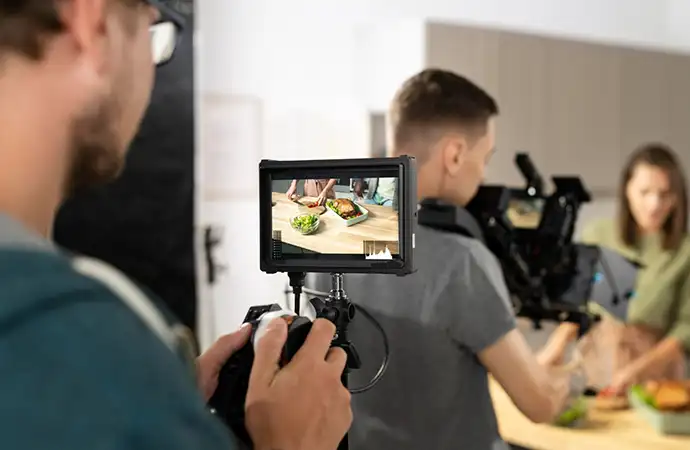
OVC stands for Online Video Commercial, a video ad made for Facebook, YouTube and other digital platforms. In Bangladesh's FMCG market, the brands pulling ahead are not necessarily those with the largest production budgets. They are the ones who have learned to extract more value from every shoot they commission.
The old model was straightforward: one shoot produced one hero video, that video ran on one or two platforms, and the campaign was complete. This approach worked when television was the primary channel. It does not work today, when a brand needs to show up on Facebook, YouTube, Instagram and digital display simultaneously — with different formats, different durations and different creative angles for each.
The new model inverts this logic. Instead of asking "What video do we want to make?", the question becomes: "How many results do we need from this production?" A single, well-planned FMCG shoot — structured correctly from pre-production — can generate 10 to 15 distinct OVC ads, each purposefully built for a specific platform, audience segment or campaign objective.
This guide explains exactly how that works, why it delivers better ROI than the traditional model, and what FMCG brands in Bangladesh need to plan before the camera rolls.
Why the Traditional FMCG Video Model Has Low ROI
The traditional production model follows a familiar pattern: a brief is written, a single concept is developed, a shoot is planned around that concept, and the final output is one finished video — typically a 30 or 45-second brand film. That film is then adapted, usually with minimal platform-specific thought, for wherever it needs to run.
The fundamental problem with this approach is that one video is being asked to do everything: create awareness, hold attention, communicate value, and prompt action — across audiences with different levels of familiarity with the brand and across platforms with completely different viewing behaviours.
- High cost per asset: the entire production budget is allocated to producing a single deliverable. If that video does not perform on a particular platform or for a particular audience segment, there is no alternative to test against it.
- Short campaign lifespan: one video burns out quickly when run at sufficient frequency to build reach. Audiences see it repeatedly, engagement drops, and the brand is forced to commission new content sooner than planned.
- No room for creative testing: effective digital advertising is built on testing different hooks, messages and formats against each other. A single video removes this capability entirely.
- Misalignment with platform algorithms: Facebook, YouTube and Instagram all reward fresh creative and penalise repetitive content through declining reach and rising cost per result. A single video running across all platforms and all audiences rapidly loses efficiency.
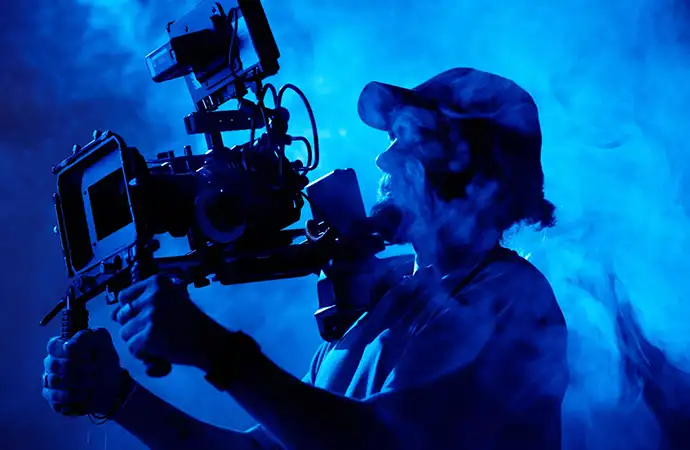
The New Model: One Shoot, Multiple OVC Outputs
High-performing FMCG brands in Bangladesh are no longer planning single productions. They are planning OVC ecosystems — a structured approach to production where every scene, angle and line of dialogue is designed to serve multiple outputs from the beginning.
The key insight is straightforward: the cost of production is largely fixed regardless of how many deliverables you extract from it. The shoot day, crew, talent, location and equipment cost roughly the same whether you leave with one edit or fifteen. The difference is entirely in the planning — specifically, how the shoot is structured before the camera rolls.
A well-planned FMCG shoot using this methodology typically delivers the following:
| Asset Type | Purpose | Typical Count |
|---|---|---|
| Hero OVC (20–30s) | Brand awareness, full story | 1 |
| Performance OVC (10–15s) | Consideration and conversion | 3–4 |
| Short cutdowns (6s) | Bumper ads, retargeting, recall | 3–4 |
| Offer-focused edits | Promotion, price, seasonal push | 2–3 |
| Retargeting reminders | Re-engage warm audiences | 1–2 |
Total: 10–14 distinct OVC assets from a single production.
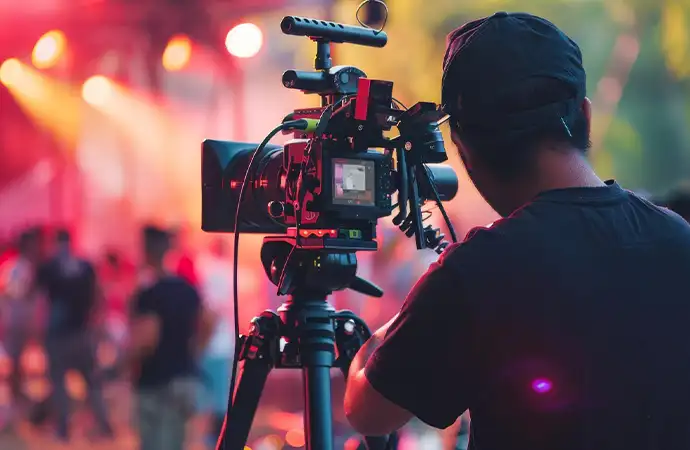
Platform-Specific OVC Formats: Why Framing Must Be Planned Before Shooting
Every major platform used by FMCG brands in Bangladesh has its own preferred format, and each format performs very differently when placed in the wrong ratio. A hero film shot in 16:9 that is simply cropped to 9:16 will lose critical visual information, cut off faces, hide subtitles and perform poorly. Platform adaptation is not post-production work — it is pre-production planning.
- Vertical (9:16) for Facebook Stories, Instagram Reels and Stories, and TikTok: This is the most important format for mass consumer reach in Bangladesh. The frame must be built around central composition, with faces and key products occupying the middle third. Text and subtitles must sit in the safe zone away from platform UI overlays.
- Square (1:1) for Facebook and Instagram feed placements: Feed placements command more screen real estate than landscape on mobile. Square format works well for product-focused edits where the product needs to be clearly visible without landscape framing.
- Horizontal (16:9) for YouTube pre-roll and skippable ads: YouTube remains important for longer consideration-phase content, tutorial-style OVCs and brand films that need the full cinematic treatment. Pre-roll requires a very strong hook in the first five seconds before the skip option appears.
When a cinematographer knows which formats are required before the shoot begins, they frame every shot to work across all three simultaneously. This is the fundamental discipline that separates multi-asset OVC production from simple post-production resizing.
The ROI Breakdown: Why This Approach Consistently Outperforms
The ROI case for multi-asset OVC production rests on two interconnected advantages: lower cost per deliverable and better campaign performance through creative variety.
Lower cost per deliverable. Production costs — crew, talent, location, equipment, direction — are largely fixed regardless of output volume. When those costs are spread across 12 assets rather than one, the cost per OVC drops significantly. A brand that produces 12 OVCs from one shoot rather than commissioning them separately across four separate productions typically achieves a cost reduction of 50 to 70 percent per deliverable. For FMCG brands running quarterly campaigns, this compounds substantially across a full year.
Better performance through creative testing. Digital advertising performance is not static — it is discovered through testing. Having 10 to 15 distinct assets means a brand can run structured A/B tests across hooks, messages, offers and formats. The winning creative combinations are identified quickly and media budget is concentrated behind them. This is simply not possible with a single video.
Extended campaign lifespan. Creative fatigue — the point at which audiences have seen an ad so many times that engagement collapses and cost rises — arrives much faster with a single asset. Rotating across 10 or more distinct OVCs dramatically extends the point at which fatigue sets in, allowing a single production investment to sustain a campaign for significantly longer.
Which FMCG Categories Benefit Most from This Approach?
The multi-asset model works across FMCG, but certain categories extract particularly high value from it given the nature of their communication needs.
- Food and beverage brands need to communicate across multiple purchase occasions — breakfast, snack, dinner, on-the-go — which maps naturally to multiple OVC angles from a single shoot. One product, different consumption moments, different audience contexts.
- Personal care brands typically have multiple benefit claims: freshness, skin health, confidence, fragrance. Each benefit can anchor a distinct OVC edit, giving the media plan variety across audience segments that respond to different value propositions.
- Home care brands often need to address both the functional product result and the emotional payoff. Separate OVCs addressing each angle — one demonstrating cleaning performance, another showing family peace of mind — both originate from the same shoot.
- Health and wellness brands have regulatory and messaging constraints that benefit from multiple gentle-touch OVCs rather than a single direct claim. A suite of shorter formats across different audience segments is more effective than one long campaign film.
- Snack and impulse purchase brands need high-frequency short-form content to maintain top-of-mind salience at the point of purchase decision. The 6-second and 10-second cutdowns are critical formats for this category, and they are most efficiently produced from a well-planned primary shoot.
Three Mistakes FMCG Brands Make That Kill Multi-Asset ROI
Even brands that understand the multi-asset concept often undermine its value through avoidable production decisions.
- Planning edits after the shoot, not before it. The most common and most damaging error. When asset planning happens in the edit suite rather than in pre-production, the footage available for each format is limited by what was incidentally captured rather than what was deliberately planned. The result is forced edits, repeated shots and ultimately fewer usable assets. The multi-asset output map must exist before the shoot brief is written.
- Shooting like a TVC. TVC production conventions — wide establishing shots, slow product reveals, cinematic pacing — do not translate to OVC performance. An FMCG shoot planned for OVC output needs to prioritise close product shots, social-native energy, early brand visibility and coverage of the first two seconds of every scene. Directors who work primarily in broadcast need to adjust their approach significantly for OVC-first production.
- Ignoring cutdowns at the brief stage. The 6-second and 10-second cutdowns are often treated as afterthoughts — trimmed versions of a longer film produced in post. In reality, the most effective short-form OVCs are built from scenes specifically designed to work at those durations. A 6-second OVC that is just the last six seconds of a 30-second film almost never performs as well as one built intentionally for that format.
How Libanza Films Structures FMCG Shoots for Multi-Asset OVC Output
At Libanza Films, every FMCG production brief begins with an asset output map — a pre-production document that defines every deliverable before a single shot is planned. The shoot schedule, scene breakdown, framing decisions and coverage plan all flow from this document rather than from a single hero concept.
Our pre-production process for FMCG multi-asset shoots covers:
- Asset inventory definition: how many OVCs are needed, what type (hero, performance, offer, retargeting), and at what durations
- Platform format mapping: which assets will be delivered in which aspect ratios, with safe zone and composition guidance for each
- Hook variant planning: identifying two or three distinct opening approaches so the brand has creative test options without additional shooting
- Offer and message segregation: structuring scenes so that product, price, benefit and brand scenes can be independently assembled in post without creative compromise
- Subtitle and text planning: ensuring every scene is produceable as a sound-off version without losing message integrity
The result is a production that costs similar to a traditional single-video shoot but delivers a full campaign suite. We do not ask "What video do you want?" We ask, "How many results do you need from this shoot?"
For more on OVC production for FMCG brands in Bangladesh, see our dedicated service page: OVC for Brands and FMCG in Bangladesh. For platform-specific guidance on Facebook and YouTube OVCs, visit our Facebook and YouTube OVC Services page.
Frequently Asked Questions: FMCG OVC ROI and Multi-Asset Production
Typically 8 to 15 OVC ads, depending on pre-production planning, the number of product variants, the platform mix and deliverable scope. Brands that plan their asset map before the shoot consistently extract more usable content than those who edit reactively after production.
No — quality often improves. When a shoot is planned with a multi-asset output in mind from the beginning, every scene, angle and line of dialogue is purposeful. This intentional approach produces stronger individual assets than a shoot planned around a single final film.
Yes. The multi-asset model is especially valuable for smaller FMCG brands because it dramatically reduces the cost per deliverable. Instead of budgeting for multiple separate shoots across a campaign cycle, the brand invests in one well-planned production and extracts a full campaign's worth of content.
Yes, provided the production is planned with platform-specific framing from the start. Shooting with safe zones for vertical (9:16), square (1:1) and horizontal (16:9) formats in mind means the same footage can be adapted for Facebook, Instagram, YouTube and TikTok without reshooting.
Almost always. One well-planned shoot produces consistent visual language, talent and brand aesthetic across all assets — which strengthens campaign coherence. Multiple small shoots often result in inconsistent creative, higher per-asset cost and more fragmented approval cycles.
The Takeaway: ROI Is Not About Spending Less. It Is About Getting More.
The brands seeing the strongest returns from FMCG video production in Bangladesh are not the ones cutting production budgets. They are the ones spending the same amount — or sometimes more — but extracting dramatically higher value from every production day through better planning.
One well-structured FMCG shoot can multiply outputs, reduce cost per ad, enable creative testing, extend campaign lifespan and ultimately deliver a more consistent and efficient brand presence across the platforms where Bangladeshi consumers spend their attention.
If your brand is still planning productions around a single final video, the shift to multi-asset OVC production is the most immediate change available to improve your video ROI — without changing your budget.
Libanza Films plans and produces FMCG OVC campaigns for leading brands across Bangladesh. To discuss how a multi-asset shoot can work for your next campaign, get in touch with our team.
Customer Reviews

Very dedicated team! Apprecite their enthusiasm, creativity and passion for their work... Read Md. Jamil Hossain Chowdhury Rahat's Full ReviewRead More


Libanza specializes in creating captivating films and advertisements with compelling narratives and stunning visuals... Read Riad Full ReviewRead More
Get in Touch
Our Clients
Diverse industries, trusted partnerships. From advertising agencies to corporate entities and non-profit organizations, our clients rely on us to bring their creative visions to life. With passion, expertise, and attention to detail, we deliver exceptional video production solutions that exceed expectations. Join our esteemed clientele and experience the power of captivating storytelling with Libanza Films.