
Fantastic team. They took ownership of the project. As a result, they gave very good creative inputs to improve the ad. They also tried hard to reduce the project cost... Read Ehtesham Ahmed's Full ReviewRead More
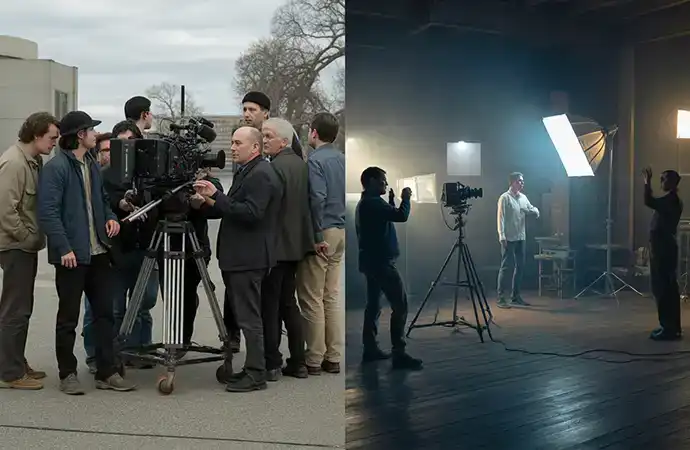
AI vs Traditional Video Production
Understanding Cost, Speed, Control, Risk, and Use-Cases in 2026
Video remains the most powerful communication format for brands, enterprises, governments, and organisations worldwide.
By 2026, decision-makers face a critical question: Should we rely on traditional video production, AI-assisted video, or a hybrid approach?
This guide explains the differences between AI video and traditional video production, where each approach works best, and how human-led AI bridges the gap between speed and trust.
Request for ServiceExplore related frameworks: AI Content Production Hub | AI Content Governance & Compliance
What Traditional Video Production Involves
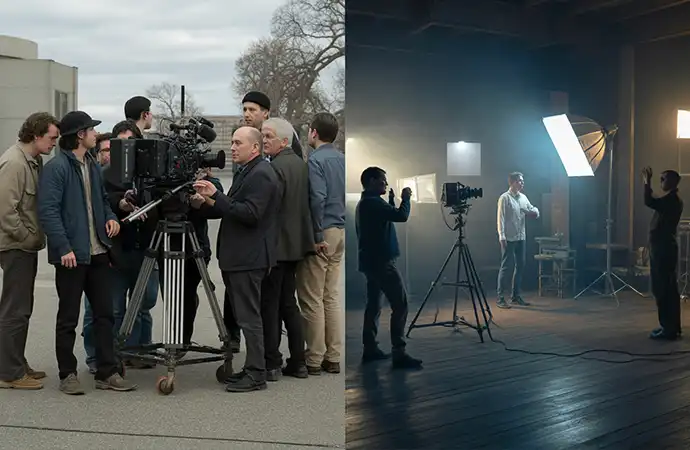
Traditional video production follows a structured, resource-intensive process.
- Script development
- Casting, locations, and logistics
- Camera crews and physical production
- Post-production editing
- Music licensing and final delivery
This approach excels in storytelling, emotional depth, and cinematic quality. It remains essential for flagship brand films, documentaries, and high-impact launches.
However, traditional production struggles with speed, scalability, localisation, and frequent updates.
What AI Video Production Means
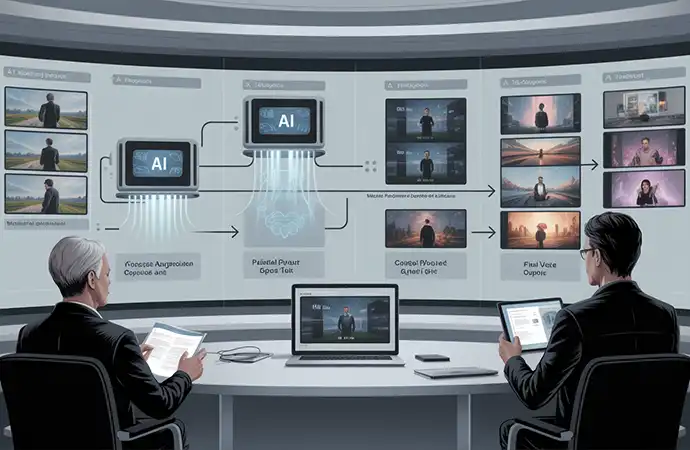
AI video production uses artificial intelligence to assist in creating, adapting, and updating video content.
- Script adaptation and versioning
- AI presenters, voiceovers, and narration
- Multilingual localisation
- Rapid content updates
- High-volume production
In professional environments, AI does not replace human decision-making. Humans define messaging, approve content, and retain accountability.
AI Video vs Traditional Video: Core Differences
Speed
Traditional video requires weeks or months.
AI video enables production in days.
Cost Structure
Traditional production has high per-video cost.
AI reduces marginal cost for every additional version.
Updates
Traditional video requires re-shooting.
AI video allows script-level updates.
Localisation
Traditional localisation is expensive and slow.
AI enables scalable multilingual delivery.
Consistency
AI ensures repeatable structure across large content libraries.
Where Traditional Video Production Works Best
- Brand storytelling and emotional narratives
- High-end TV commercials
- Luxury and lifestyle branding
- Documentaries and real-world storytelling
- Celebrity or influencer-led campaigns
Traditional production remains irreplaceable when authenticity, human emotion, and cinematic impact are essential.
Where AI Video Production Excels
- Training and onboarding
- Product explainers and updates
- Performance marketing creatives
- Multilingual communication
- Government, NGO, and enterprise training
AI video is most effective where clarity, consistency, and scalability matter more than cinematic storytelling.
Related services: AI Video Content Creation | AI Training & Avatar Videos
Human-Led AI: The Hybrid Model
The future of video production is not AI versus humans. It is humans using AI responsibly.
- Human strategy and scripting
- AI-assisted execution
- Human review and approval
- Governance and compliance controls
This model delivers speed without sacrificing trust.
FAQs: AI vs Traditional Video Production
AI video significantly reduces marginal cost when producing multiple versions, updates, or multilingual adaptations.
Traditional production remains cost-effective for high-impact flagship campaigns where cinematic storytelling is essential.
No. AI does not replace traditional video production.
The strongest model for most organisations is a hybrid approach — using traditional production for storytelling and AI for scale, training, localisation, and performance content.
Yes, when produced under a human-led governance framework.
Libanza Films ensures human approval, compliance awareness, brand alignment, and transparent AI usage where required.
Traditional production is best suited for:
- High-end brand storytelling
- Luxury campaigns
- Emotion-driven narratives
- Documentaries and cinematic productions
AI video excels in:
- Training and onboarding
- Compliance communication
- Performance marketing creatives
- Multilingual rollouts
- High-volume content updates
Yes. AI-assisted training videos allow script-level updates without re-shooting, making them ideal for:
- Policy changes
- Regulatory updates
- Ongoing internal education
AI video is compliant when used responsibly.
Libanza Films follows structured governance aligned with advertising standards, transparency principles, and enterprise-level compliance expectations.
Self-service AI tools generate automated outputs.
Libanza Films delivers managed, human-led AI production, including strategy, script refinement, quality control, governance oversight, and enterprise-ready delivery.
Very dedicated team! Apprecite their enthusiasm, creativity and passion for their work... Read Md. Jamil Hossain Chowdhury Rahat's Full ReviewRead More
Libanza specializes in creating captivating films and advertisements with compelling narratives and stunning visuals... Read Riad Full ReviewRead More
Our Clients
Diverse industries, trusted partnerships. From advertising agencies to corporate entities and non-profit organizations, our clients rely on us to bring their creative visions to life. With passion, expertise, and attention to detail, we deliver exceptional video production solutions that exceed expectations. Join our esteemed clientele and experience the power of captivating storytelling with Libanza Films.