

Fantastic team. They took ownership of the project. As a result, they gave very good creative inputs to improve the ad. They also tried hard to reduce the project cost... Read Ehtesham Ahmed's Full ReviewRead More
What Is a Film Fixer? A Guide for International Productions Filming in Bangladesh
If you are planning an international production in Bangladesh — whether a documentary, a broadcast news feature, an NGO communications film or a commercial shoot — you will encounter the term "film fixer" early in your research. You will be told you need one. You may not yet understand exactly what that means or why it matters as much as it does.
This guide explains the film fixer role clearly — what a fixer actually does, why the role exists, what distinguishes a good fixer from an inadequate one, and why Bangladesh in particular is a country where the quality of your local fixer determines whether your production succeeds or fails.
What Is a Film Fixer?
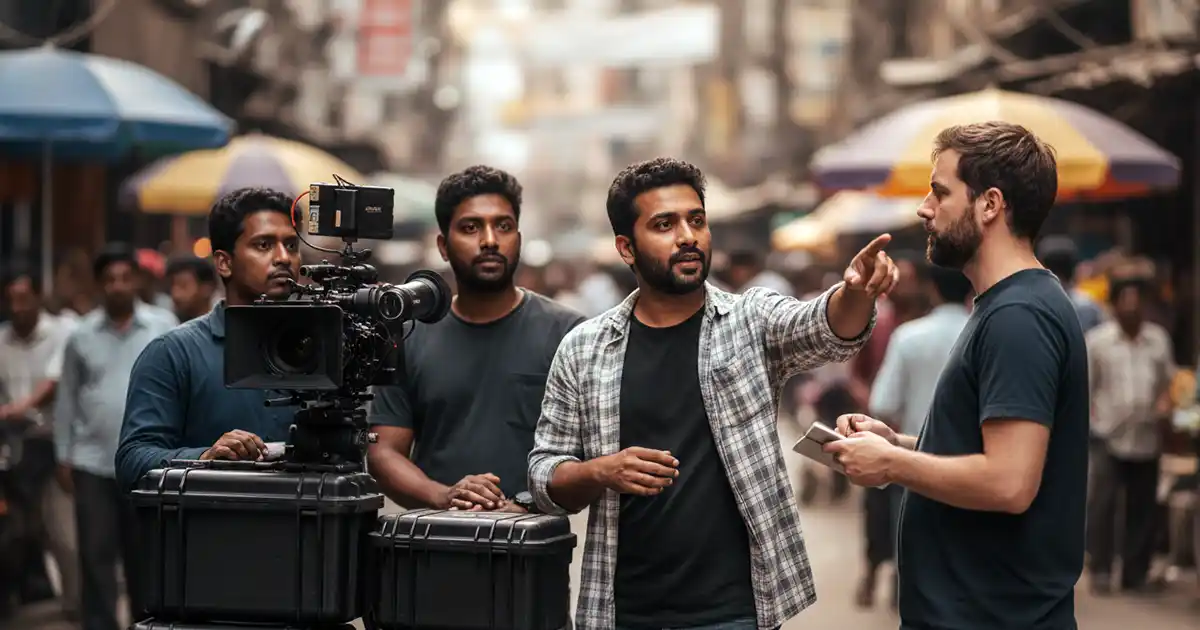
A film fixer is a local production professional who facilitates international film and video productions in a foreign country. The fixer is the bridge between the international production team and everything that team cannot access, understand or navigate independently from outside the country.
The term "fixer" comes from the idea of fixing problems before they happen — and solving them when they do. A fixer does not direct the film, operate the camera or edit the footage. The creative direction belongs to the visiting production team. The fixer's job is to make sure that team can actually do their work — legally, safely and efficiently — in an environment where language, regulation, bureaucracy and cultural norms are unfamiliar.
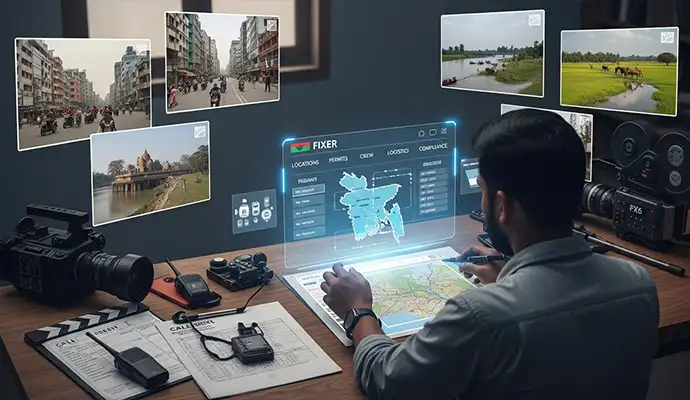
In practical terms, a film fixer in Bangladesh is responsible for:
- Obtaining government filming permits and official clearances
- Arranging media and journalist visa invitation letters for arriving crew
- Scouting and securing access to filming locations — urban, rural, industrial and sensitive
- Liaising with police, local administration, community leaders and institutional gatekeepers
- Sourcing and managing local crew — camera assistants, sound recordists, production assistants, drivers and translators
- Managing transport, accommodation and daily logistics
- Providing real-time problem solving when plans change — and they always do
- Advising on cultural, political and security considerations throughout the production
Why International Productions in Bangladesh Cannot Work Without a Fixer
The necessity of a local fixer is not the same in every country. In some markets, an experienced international crew can navigate permits, locations and logistics with a reasonable amount of research and a translation app. Bangladesh is not one of those markets.
Several factors make local fixer support non-negotiable in Bangladesh:
- A multi-layer permit system: Foreign productions require Ministry of Information clearance, and often additional district-level, site-specific and sector-ministry approvals depending on what and where they are filming. These processes run through personal relationships with officials as much as through official applications. A fixer with established relationships processes permits that would take a stranger months — or that would simply be refused.
- Visa compliance requirements: Foreign crew members must enter Bangladesh on journalist or media visas, not tourist visas, to film professionally. The invitation letter required for this process must come from a registered Bangladesh organisation. Without a fixer, there is no invitation letter — and without the correct visa, crew members face equipment confiscation and deportation.
- Community access is relationship-dependent: A camera that appears unannounced in a Dhaka slum community, a rural village or a sensitive institution will not get footage. It will get a crowd, then a refusal, then potentially an altercation. Every meaningful filming environment in Bangladesh — particularly those that make Bangladesh compelling to international documentary and factual productions — requires advance community liaison that only a trusted local partner can conduct.
- Language and cultural barriers are substantial: English is not widely spoken outside professional and academic circles in Bangladesh. Most of the people international productions want to film — factory workers, riverine communities, rural farmers, climate-affected populations — do not speak English. A fixer with both Bangla fluency and international production communication standards is the only way this translation happens reliably.
What a Film Fixer Is Not — Common Misconceptions
The fixer role is frequently misunderstood by international productions approaching Bangladesh for the first time. Clearing up these misconceptions before you start planning protects your budget and your schedule.
- A fixer is not simply a driver: Transport coordination is part of a fixer's role, but it is the smallest part. A production that hires a driver and calls them a fixer will discover this difference on the first day when a permit is refused and no one knows who to call.
- A fixer is not a translator alone: Translation is one function within the fixer role. A Bangla–English translator without production experience, authority relationships and logistics capability is not a fixer. They are an interpreter.
- A fixer is not interchangeable with a local contact: Many international productions arrive in Bangladesh with a personal contact — a friend, a journalist acquaintance or a local academic — and attempt to use that person as their fixer. Unless that person has specific production experience, government permit relationships and logistics capacity, the arrangement will fail at exactly the moments it matters most.
- A fixer does not need to be cheap to be good value: A fixer at USD $80/day who cannot obtain permits, cannot secure community access and cannot communicate effectively with authorities is more expensive than a fixer at USD $250/day who can — because the day rates saved are dwarfed by the production days lost.
- A fixer is not optional for "simple" shoots: Productions consistently underestimate Bangladesh's regulatory requirements. There is no such thing as an informal, permit-free documentary shoot in a Dhaka hospital, a garment factory or a rural community. The "simple" shoot that skips the fixer is the one that ends with confiscated equipment and unusable footage.
What Separates a Good Film Fixer from a Poor One in Bangladesh
The film fixer market in Bangladesh contains professionals with genuine capability and individuals who present themselves as fixers without the experience, relationships or skills to deliver. The difference between them is not always visible before the production begins — but it becomes immediately apparent the first time a permit needs to be processed, a community needs to be engaged or a problem needs to be solved in real time.
A genuinely capable film fixer in Bangladesh will have:
- A verifiable production track record: Real productions they have supported, with production types, client categories and outcomes they can describe specifically. Not claims — evidence. Ask for it.
- Established government and authority relationships: The fixer should be able to explain their permit process in detail — which ministry contacts they have, how long standard permits take them and what happens when a permit is delayed. Vague answers here are a significant warning sign.
- Strong English communication throughout: Not just on the initial enquiry call. The fixer should be able to communicate clearly, promptly and professionally throughout pre-production coordination, on-set issues and post-shoot administration.
- Transparent, itemised budgeting: A fixer who provides a clear cost breakdown — separating their day rate from permit costs, transport, crew and accommodation — demonstrates both professionalism and the kind of financial transparency that international productions require for their accounting.
- Familiarity with international production standards: The fixer should understand what international broadcasters, NGO communications teams and commercial directors expect in terms of call sheets, schedule management, release forms, safety briefings and delivery standards. A fixer who has only ever worked on local productions may not.
- Cultural and political fluency: Bangladesh's political and social environment has specific sensitivities that a good fixer will brief the international team on proactively — not after something goes wrong on set.
The Difference Between a Film Fixer and a Production Company in Bangladesh
Understanding this distinction helps international productions choose the right level of local engagement for their specific project.
A film fixer supports an international production that arrives in Bangladesh with its own creative direction and technical team. The fixer handles access, logistics and coordination — but the visiting DP shoots, the visiting director directs and the international producer manages the editorial process.
A production company takes responsibility for the full creative and technical execution of a project. The international client provides a brief — the production company produces the film in Bangladesh and delivers the finished content.
Many international productions need something in between: a local team that can provide a cinematographer, sound recordist and production assistant, while the visiting director retains creative control. This hybrid arrangement — where the international crew brings the vision and the local partner provides the execution infrastructure — is increasingly the standard model for budget-conscious international documentary and factual productions.
Libanza Films operates across all three modes — pure fixer support, hybrid crew provision and full local production — with the level of engagement determined by the international team's needs and budget.
How a Film Fixer Works in Practice — A Bangladesh Production Day
Understanding what a fixer actually does on a working production day clarifies why the role is so central to international shoots in Bangladesh.
A typical documentary shoot day supported by a Libanza Films fixer looks like this:
- Pre-dawn: Fixer confirms locations, checks permit documentation, briefs the driver on route and contingency routes given Dhaka traffic, and confirms all local crew call times.
- Arrival at first location: Fixer is already present and has liaised with the location contact, briefed any community leaders or institutional gatekeepers and confirmed camera setup positions are agreed.
- Interviews: Fixer provides Bangla–English interpretation for subject interviews, manages community members not being filmed who are drawn to the camera and ensures the subjects understand consent and how the content will be used.
- Mid-shoot problem: A local authority official arrives and questions the crew's right to film. The fixer presents permit documentation, communicates calmly with the official and resolves the situation without disrupting the shoot.
- Location move: Fixer coordinates vehicle movement, crew transport and equipment handling between locations while the international director reviews footage.
- End of day: Fixer confirms next day's schedule, confirms any permit requirements for the following locations and briefs the international producer on any access adjustments that need to be made.
None of what the fixer does on this day is visible in the finished film. But without it, the finished film does not exist.
Frequently Asked Questions — What Is a Film Fixer?
A film fixer is a local production professional who facilitates international film and video productions in a foreign country. The fixer manages everything the international crew cannot handle independently — permits, visas, location access, authority liaison, local crew coordination, logistics and on-ground problem solving. In Bangladesh, a film fixer is essential for any international production, from solo documentary filmmakers to full broadcast crews.
A film fixer focuses on access, logistics and local coordination for an international crew that arrives with its own creative direction and technical team. A production company handles full creative and technical execution of a project. In Bangladesh, the distinction is not always clear-cut — established production companies like Libanza Films offer both dedicated fixer services for arriving international crews and full local production execution for clients who want to commission the entire shoot locally.
Yes. Bangladesh has a defined regulatory framework for foreign filming — permits, media visas and location access coordination are all required processes that international crews cannot manage independently. Productions that attempt to film in Bangladesh without a local fixer consistently encounter permit refusals, location access denials, equipment confiscation risks and compliance failures that a qualified fixer would have prevented.
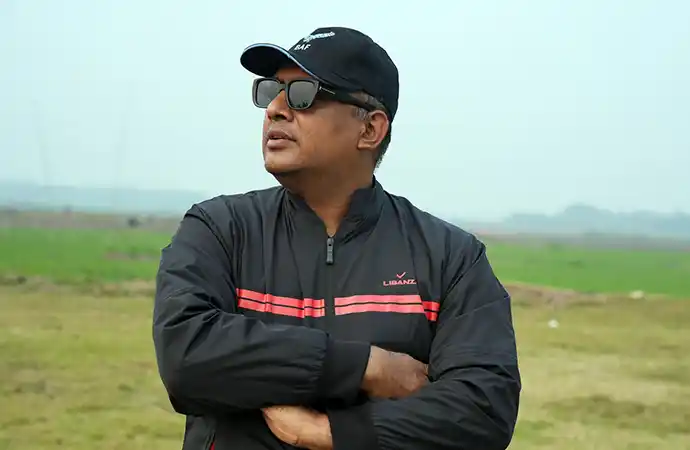
About the Author
Azizul Hoque Shiplu
Founder and Film Director of Libanza Films. Azizul has worked in commercial film production and advertising since 2007, beginning his career at Ogilvy and Mather and training at the Zahir Raihan Film Institute. He has personally acted as film fixer and production support for international crews from the USA, UK, Belgium, Romania, Malaysia, Ecuador, Singapore, UAE, France and India — including ongoing broadcast work with Al Arabiya News (UAE) and production collaboration with RagingNation Films, Los Angeles. The practical descriptions of the fixer role in this guide — from permit processing to production day management — are drawn from direct experience on the ground, not theory.
Planning to Film in Bangladesh? Talk to Our Fixer Team.
Libanza Films provides professional film fixer and production support services for international productions across Bangladesh. From government permit facilitation and media visa invitation letters to local crew, equipment, transport and on-ground coordination — we handle everything your production needs to film legally, safely and efficiently in Bangladesh.
Related Reading
- Film Fixer in Bangladesh — Full National Coverage and Pricing
- Film Fixer in Dhaka — Permits, Old City Access and Broadcast News
- Film Fixer in Cox's Bazar — RRRC Permits, Coastal and Camp Productions
- Film Fixer in Sundarbans — Forest Permits, Boat Logistics and Wildlife
- Film Fixer in Chittagong — Ship-Breaking Yards and Hill Tracts Access
- Film Fixer in Sylhet — Tea Estates, Haor Wetlands and Swamp Forest
- Filming Permits and Media Visa Guidance in Bangladesh
- How to Hire a Film Fixer in Bangladesh: The Complete Guide (2026)
- Drone Filming Permits in Bangladesh: Complete Guide (2026)
- Filming in Bangladesh from the UK and USA: Guide for Diaspora Filmmakers (2026)
- How Much Does a Film Fixer Cost in Bangladesh? (2026 Guide)
- Filming Costs in Bangladesh: Budget Guide for International Productions (2026)
- Filming Permits in Bangladesh Explained: Step-by-Step Guide for Foreign Crews
- Film Locations in Bangladesh: A Director's Guide for International Productions
- International Production Support in Bangladesh: What Foreign Production Companies Need to Know
Customer Reviews

Very dedicated team! Apprecite their enthusiasm, creativity and passion for their work... Read Md. Jamil Hossain Chowdhury Rahat's Full ReviewRead More


Libanza specializes in creating captivating films and advertisements with compelling narratives and stunning visuals... Read Riad Full ReviewRead More
Get in Touch
Our Clients
Diverse industries, trusted partnerships. From advertising agencies to corporate entities and non-profit organizations, our clients rely on us to bring their creative visions to life. With passion, expertise, and attention to detail, we deliver exceptional video production solutions that exceed expectations. Join our esteemed clientele and experience the power of captivating storytelling with Libanza Films.