

Fantastic team. They took ownership of the project. As a result, they gave very good creative inputs to improve the ad. They also tried hard to reduce the project cost... Read Ehtesham Ahmed's Full ReviewRead More
How To Make a Documentary: A Complete Guide by Libanza Films
Documentaries are one of the most powerful formats in video storytelling. When made well, they hold audiences for an hour or more, shift perspectives, build brand authority, and create lasting impact. When made without a clear process, they stall at the editing stage, run over budget, and never find an audience.
At Libanza Films, we have been producing documentaries in Bangladesh for over a decade — for international NGOs, development organisations, corporate clients, and independent filmmakers. This guide covers every stage of the documentary production process, from the first idea to final distribution.
Discuss Your Documentary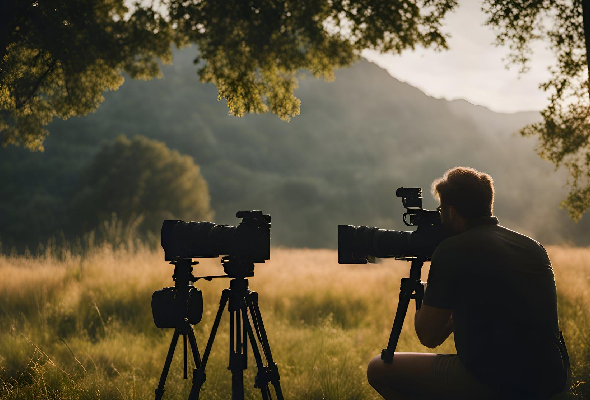
Step 1: Concept Development
Every documentary begins with a question, a tension, or a story that demands to be told. Strong documentary concepts are not simply topics — they are entry points into a specific human experience. "Climate change in Bangladesh" is a topic. "The delta farmers who have lost three homes in ten years" is a documentary concept.
At the concept development stage, define the core question your documentary will explore, identify the people or places that will carry the story, and consider what unique access or perspective you can bring that no other filmmaker has. If you cannot answer those three questions clearly, the concept needs more work before production begins.
Our concept development service works with clients from the very first idea — helping to sharpen a premise into a producible, compelling documentary concept.
Step 2: Research and Pre-Production Planning
Research is what separates a surface-level documentary from one with genuine depth and credibility. At this stage, you are not just gathering facts — you are mapping the story. Who are the key characters? What is the narrative arc? What does the documentary need to show, not just tell?
Pre-production planning runs in parallel with research. This means developing a production schedule, identifying locations, securing access permissions, planning crew requirements, and building the production budget. In Bangladesh, location research is particularly important — whether you are filming in Dhaka, in the Sundarbans, or along the char lands of the north, logistics and access need careful planning in advance.
Step 3: Scripting and Storyboarding
Documentary scripts look different from fiction scripts. Most documentaries are not fully scripted in advance — the story emerges from what is actually captured. What you do need at this stage is a treatment: a document that defines the film's narrative structure, the key scenes and sequences you intend to shoot, the main characters and their roles in the story, and the overall editorial tone.
For interview-driven documentaries, develop a question framework for each interviewee rather than a fixed script. For observational or fly-on-the-wall documentaries, define the situations and contexts you need to capture. Storyboarding is most useful for sequences that need to be designed in advance — opening scenes, title sequences, or visually complex segments.
Our script development team has experience producing treatments and production documents for both short-form and feature-length documentary projects.
Step 4: Production — Filming Your Documentary
Production is where the story is gathered. For documentaries, this typically means a combination of observational filming, staged or semi-staged sequences, talking-head interviews, and archival or supplementary footage. Each requires a different approach from your crew.
The most common production mistake in documentary making is under-shooting coverage. Unlike a commercial where every shot is planned, documentaries require you to be present for real moments that you cannot stage again. Build extra shooting days into your schedule for unexpected access, develop rapport with your subjects before the camera rolls, and always capture more than you think you need. Footage you do not shoot cannot be edited in later.
For international productions shooting in Bangladesh, our production support and fixer services provide local crew, locations, permits and logistics management for the full production period.
Step 5: Interviews and B-Roll
Interviews are the backbone of most documentaries. The quality of your interviewees, and the quality of the questions you ask them, will largely determine the strength of your film. Choose subjects who can speak to the core question of your documentary from a position of lived experience or expertise — and who communicate naturally on camera. A technically knowledgeable but stiff interviewee will undermine even the best editorial structure.
B-roll — the visual footage that plays under narration and interview audio — is what gives a documentary its texture and sense of place. Prioritise shooting original B-roll in specific, meaningful locations rather than relying on generic stock footage. In Bangladesh, the visual landscape is rich and distinctive: use it. River systems, urban markets, agricultural land, industrial sites — authentic location footage elevates documentary quality significantly.
Step 6: Post-Production — Editing Your Documentary
Post-production is where the documentary is actually made. You may have gathered excellent footage and interviews — but the structure, pacing and emotional arc of the film are built entirely in the edit. This is the most time-intensive stage of documentary production, and the one most frequently underestimated in project planning.
A typical documentary editing process moves through several stages: assembly cut (all usable material arranged in rough sequence), rough cut (narrative structure established), fine cut (pacing and transitions refined), and picture lock (final edit approved before audio and colour work begins). Allow realistic time at each stage — rushing the edit produces a film that feels rushed.
Sound design and music are equally important in post-production. A documentary without carefully mixed audio, even with stunning visuals, will fail to hold an audience. Invest in proper sound post-production — it is not a cost to cut.
Step 7: Distribution and Release
A documentary that is never seen has no impact. Distribution planning should begin during pre-production, not after the film is finished. Consider your primary audience and the channels that will reach them most effectively.
For corporate and NGO documentaries, distribution typically runs through the client's owned channels: website, social media, internal communications, and event screenings. For independently produced documentaries, options include film festival submission, OTT platform pitching, broadcast licensing, and digital self-distribution through YouTube or Vimeo. In Bangladesh, OTT platforms such as Chorki, Bongo, and Bioscope represent an increasingly viable route for locally produced documentary content.
Start Your Documentary ProjectWhy Choose Libanza Films for Your Documentary?
- End-to-end production: We manage every stage from concept through delivery, including concept development, scripting, filming, editing and distribution support.
- Bangladesh location expertise: Our team has filmed across Bangladesh — from Dhaka to Cox's Bazar, the Sundarbans, the tea gardens of Sylhet, and the chars of the north. We know how to work in these environments safely and efficiently.
- International client experience: We have produced documentaries for international NGOs, UN agencies, development organisations and broadcast clients. We understand international production standards and deliver to them.
- Creative storytelling: We approach every documentary as filmmakers first. The technical quality of the output is important — but the story is always the priority.
Heritage & Archaeological Filming Sites
Customer Reviews

Very dedicated team! Apprecite their enthusiasm, creativity and passion for their work... Read Md. Jamil Hossain Chowdhury Rahat's Full ReviewRead More


Libanza specializes in creating captivating films and advertisements with compelling narratives and stunning visuals... Read Riad Full ReviewRead More
Get in Touch
Our Clients
Diverse industries, trusted partnerships. From advertising agencies to corporate entities and non-profit organizations, our clients rely on us to bring their creative visions to life. With passion, expertise, and attention to detail, we deliver exceptional video production solutions that exceed expectations. Join our esteemed clientele and experience the power of captivating storytelling with Libanza Films.